Sep 12 2022, Monday
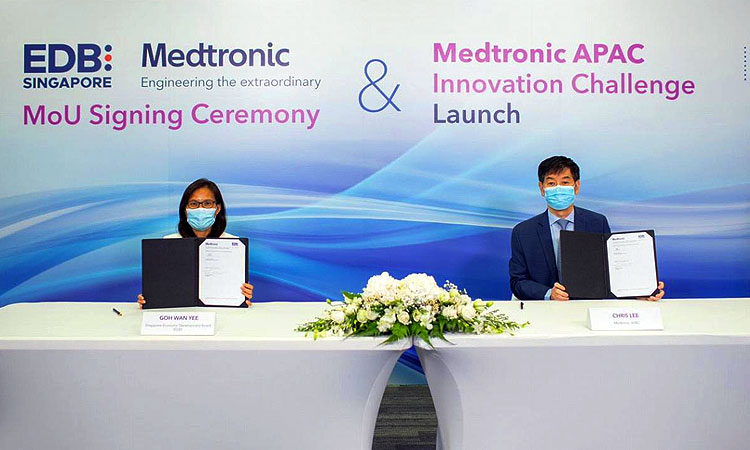
A conversation with Chris Lee, President, Asia Pacific, at Medtronic, about the need for new modes of collaboration to drive innovation and solve the region’s unique healthcare challenges.
In a conversation with Chris Lee, President, Asia Pacific, Medtronic, he talked about the need for new modes of collaboration to drive innovation and how to solve the region’s unique healthcare challenges.
APAC is a diverse region, with each market facing its own unique healthcare challenges. Some trends that we have observed include an ageing population, rising healthcare costs, and shifting consumer expectations. Consumers are more informed about their conditions than ever, more engaged, and expect better healthcare experiences.
New modes of collaboration, such as open innovation, can serve as a gateway between our own global network and innovators across the region to solve these challenges meaningfully with technology.
Together, we aim to build capabilities in areas such as artificial intelligence, robotics, and digital health, to improve healthcare delivery and reduce barriers to affordable care.
Internally, we’ve been championing a culture of innovation through our employee idea generation platform called MDT Spark. Launched in 2019, the internal innovation challenge provides funding, senior counsel, and resources to implement the most promising ideas around process or product improvement. Of the 531 ideas submitted to date, Medtronic has invested in 24 of the most promising projects that have provided innovative solutions to improve our business operation and how we support doctors and patients.
Building on this concept, the Medtronic APAC Innovation Challenge (MAIC) will see a similar sourcing of ideas, but from the external innovation community. Launched in October this year, the challenge seeks technopreneurs and startups that can accelerate life-transforming technologies, bring better outcomes for all through tailored solutions, simplify healthcare by delivering experiences that put people first, and drive personalised healthcare solutions through insight-driven care.
Singapore’s Health Minister, Ong Ye Kung, recently shared his sentiment that “digital disruption in healthcare is unlikely to happen as quickly as in other industries, given the complexity of the sector”. This view is aligned with our understanding of the challenges MedTech startups face.
The process of developing MedTech solutions is typically longer and more expensive than other tech startups. MedTech startups also face more difficulty securing venture funding as investment risks are typically higher and returns slower. Venture Capitalists in the APAC region are more likely to invest in startups that are already generating revenue or could prove quick returns, whereas MedTech solutions require a much longer gestation period of between three to five years before churning their first revenue dollar.
My advice to MedTech startups will be to stay close to the ground – talk to healthcare providers and patients along the journey – and create solutions that put people first; and when it comes to investors, look for strategic partners who can offer support and industry expertise, not just funding.
President for Asia Pacific, Medtronic